Like most major cities, KL has some really great attractions, which can be seen in 3-4 days. So people that are in Malaysia for longer than that have asked me if there are interesting day and overnight trips from KL. The answer in short is yes! With great public transportation and infrastructure in Malaysia, you can see the entire country using KL as the starting-off point. Below, I have noted a few of the best options, along with information on if a car is required, how much time you need there, and must-see’s while you are there.
Day Trips
Batu Caves
o Overview: Batu Caves is a Hindu cave-temple located about 13 KM from KL, which contains the largest Lord Murugan statue in the world. As it’s so close, it makes for a popular half-day excursion from KL. In addition to seeing the temple, you can also watch monkey swinging in the trees and do some cave exploring of your own.
o Things to See: Definitely see the Temple Cave and Art Gallery Cave. You can also explore the surrounding nature, and drink cool-down with a fresh coconut from one of the local vendors.
o How to Get There: You can take the KTM Komuter train to the Batu Caves stop. You can also take the LRT to Titiwangsa, and then take the U6 bus to the caves. If you take the bus, tell the bus driver of your intention so you won’t miss your stop. Alternatively you can take a 30-45 min taxi from KL.
Putra Jaya (taxi hire is recommended, but can use public transport)
 o Overview: Putra Jaya is the futuristic government hub of Malaysia. The entire city was masterminded by the ex- Prime Minster of Malaysia, Mahathir Mohamad. Under his 22 year rule, Mahathir is credited with bringing Malaysia into the modern-age, overseeing infrastructure, educational and economic gains for the country. One piece of his plan was to develop an entirely new city which would function as the governmental nucleus of the country. This city became Putra Jaya, and houses the Prime Minister’s office, Palace of Justice (which looks like the sultan’s palace in the Disney movie Aladdin), convention center, and countless other architectural wonders.
 o Things to See: Definitely check out the Palace of Justice, Prime Minister’s office, Putra Mosque (Pink Mosque) and Tuanku Mizan Zainal Abidin Mosque (Crystal Mosque). Putra Jaya is splendid both by day and night, and can be visited at either time. Also consider taking a river cruise to see, among others, the Prince’s Palace and surrounding landscape. Don’t forget to notice the different street light designs that decorate the wide streets.
o How to Get There: The best thing to do in Putra Jaya is drive around to see all the buildings. You can take the Komuter train from KL Sentral to Putra Jaya (look for KILA ticket counter, as they run an express train to Putra Jaya). One you arrive, you can solicit a taxi driver for an hour to take you around. Otherwise, you can connect with the local busses, which stop at all the major locations.
§ If you take the train, one the way back you can stop at the Serdang Komuter stop and check out the Mines Shopping Mall, which is an indoor mall that was developed over an abandoned mine. Its design is to mimic Venice, and you can even take a boat ride from the train station to the mall for RM1.
Malacca
o Overview: Malacca is a historic port town with Chinese, Portuguese, Dutch and British influences. From the 1300s to post-colonial times, Malacca was used as a strategic port along the spice route from Indonesia, as well as the silk trade from China. From the crumbling colonial church to the oldest Buddhist, Hindu and Muslim temples in Malaysia (located all on the same street), there is something for everyone to enjoy
o Things to See: The center of Malacca is quite small and most attractions are in short walking distance, and can be divided into two distinct areas: Colonial Center and Chinatown. The top places to experience in the Colonial Center are Fort A Famosa (the remnants of a Portuguese fort) and St. Peter’s Church (a Dutch Fort from the early 1700’s that contains a small internal graveyard and all-encompassing views of the port and city). In Chinatown, definitely experience Jonker Street (Chinatown street with great antiques), and the first-in-Malaysia places of worship for Bhudism (Cheng Hoon Teng), Hinduism (Sri Poyyatha Vinayagar Moorthi Temple), and Islam (Tranquerah Mosque) – which conveliently are all located in the same street in Chinatown. In addition to these sites, Malacca is famous for its Nyona food (a blend of Chinese and Malaysian cuisines). You can go to the Visitor Center for more information on sites and food in the area. However, as a heads up, the Visitor Center charges RM5 for a walking map. If you would like a free map instead, you can print one from this site.  o How to Get There: The easiest way to get to Malacca is via bus. Busses run every 30 minutes from Terminal Bersepadu Selantan (TBS) TBS is a bus station that services southern-bound journies, so no reservations are needed. You can just show up at the bus station to purchase a ticket. Once you arrive in Malacca, you can either take a taxi to city-center or choose the public buss, which only costs RM1, but takes significantly longer than the taxi. If you prefer the city bus, follow a majority of the bus passengers who will also be taking the bus. Once you arrive in the city-center, you will see the red brick buildings Malacca is famous for and a water fountain. You can then exit the bus at this stop.
§ LRT: take Ampang line towards Sri Petaling, get off at Bandar Tasik Selation
§ KTM: take Seremban line, get off at Bandar Tasik Selation
§ ERL: take KLIA transit, get off at Bandar Tasik Selation
· From the train station there is a bridge that directly connects to the bus terminal
Port Dickson
o Overview: Port Dickson is a sleeping beach town, popular with locals. Although the beach is pretty ordinary, especially compared to Langkawi and Perhentian, it is close enough to be enjoyed in a day-trip from KL (as it’s only a 1 ½ hour bus ride from KL).
o Things to See: The beach is a must. In addition, check out the Cape Rachardo Lighthouse (built in the 16th century). Check out wikitravel for more information. o How to Get There: You can take the KTM Komuter train to the Seremban stop. From there you can catch a bus to Port Dickson. You can also take a bus from Malacca to Port Dickson, so can combine Malacca and Port Dickson into a 2-day trip.
Overnight Trips
Cameron Highlands (car or tour group recommended)
o Overview: The Cameron Highlands contain awe-inspiring tea and strawberry plantations located a short drive away from KL. The Cameron Highlands are a popular local destination, as an escape from the heat of KL (the highlands offer temperatures must cooler than KL) to the serenity of the relaxing countryside.
o Things to See: It is essential to see the tea plantations where you can learn how tea is grown, walk among the tea fields and of course, enjoy a cup of tea with lunch or a snack. BOH tea plantation is the most famous in Malaysia, as their tea is sold everywhere in the country. Also check out the strawberry farms and vegetable farms, and pick up some goodies at the local farmer’s market. o How to Get There: You can take a bus from Puduraya Bus Station. The easiest way to get to Puduraya is via the Plaza Rakyat LRT station (located right at the stop). Alternatively, you can take a 5 minute walk from Chinatown (Pasar Seni stop on the LRT) or 10min walk Bukit Bintang. As the plantations are far apart, consider either renting a car or going in a bus tour from KL.
Ipoh
o Overview: Much like Malacca, Ipoh is a historic town with colonial roots dating back to the 1600’s. Compared to Malacca, Ipoh has a distinctly Chinese feel, and is famous for its’ many local eateries. The city-center is easily walkable, and the visitor’s information center provides amazing maps and materials for free. (I enjoyed Ipoh a lot more than Malacca, as the town was less commercialized, and seemed to be a real-living city and not just a tourist trap).
 o Things to See: In addition to completing the free walking tour (maps are at the visitor center), and eating at the local eateries, consider strolling the winding streets to discover antique stores. You can even watch a local artisan create bamboo furniture (which is quite affordable). If you are adventurous, consider taking a taxi to the Three Buddhist cave temples located on the edge of town. These temples are really unique to Ipoh – finding creative ways to juxtapose temples right into the limestome caves. One temple even includes a rather-strenous treck deep inside the cave à from which at the top you can see an impressive view of downtown Ipoh.
 o How to Get There: You can take a train from KL Sentral to Ipoh. These tickets can be purchased on the day of departure or in advance, which can be done online. Alternatively, you can take a bus from the Puduraya Bus Station (which is discussed in greater detail under Cameron Highlands). The bus is faster than the train, as long as you are traveling during off-peak times. It takes between 2-4 hours to get to Ipoh, depending on traffic.
Penang
o Overview: Like Malacca, Penang is also a colonial town with European roots. In Malaysia when people mention Penang their mouths begin to water – people actually go on eating tours of the city. So if you venture to Penang, eating is a MUST! In addition to all that wonderful food, Penang has a well-preserved historical center, and is even considered a UNESCO World Heritage Site (an honor shared with Malacca).  o Things to See: Other than eating, check out Chinatown, the Clock Tower and Esplanade (a seafront walkway that contains many hawker stalls, as well as exquisite colonial buildings)
 o How to Get There: Like Ipoh, you can take a train from KL Sentral. These tickets can be purchased on the day of departure or in advance, which can be done online. Alternatively, you can take a bus from the Puduraya Bus Station (which is discussed in greater detail under Cameron Highlands). The bus is faster than the train, as long as you are traveling during off-peak times. It takes between 5-7 hours to get to Penang, depending on traffic.
Langkawi (See my separate post on Langkawi for more details)
o Overview: Langkawi is a stunning beach resort located in the Northwest corner of Malaysia, right at the border with Thailand. Langkawi consists of a series of 99 islands, stunning aquamarine waters, white sand, and lush tropical forests.
o Things to See: Beaches, cable car and walking bridge, hiking, 3-Island Hopping Tour
o How to Get There:
§ A train from KL Sentral leaves every night at 11 PM (discussed in separate post).
§ Alternatively, you can take a bus from the Puduraya Bus Station (which is discussed in greater detail under Cameron Highlands).
Perhentian (3+ day trip is best)
o Overview: Beach, beach and more beach! Perhentian is voted one of the best beaches in the world and locals and foreigners alike flock to its many pristine shores where you can rest in the powdery white sand sitting under the shade of majestic palm trees, trek through the jungle paths that connect secretive coves, and discover tropical coral and fish through snorkeling and scuba diving the shimmering waters. 
o Things to See: Perhentian’s one and only objective is to help you relax. There are two islands of Perhentian: Kecil and Besar. Kecil is the smaller of the two and is set-up for the backpacker and budget traveler. It also contains a small by lively nightlife. Lodging on Kecil is pretty basic à where fans and 24 hour electricity are a luxury and air conditioning and hot water are pretty much unheard of. On the plus side, a rom can run as low as RM30 a night. Besar is the bigger of the two and boosts more luxurious accomodations (which can range from simple chalets on the beach to full-fledged resorts). Besar is also the quieter of the two, and thus, a bit more family-friendly.
o How to Get There: You can take an overnight bus from KL that leaves from the Putra Bus Station (a.k.a. Hentian Putra) heading towards Kuala Besut. (The Putra Bus Station is close to either the PWTC stop on the LRT or the Putra station on the KTM Komuter.) From Juala Besut, walk to the jetty and take a ferry to Perhentian. The ferry will stop at both islands.
Singapore (can see a lot in a 2 day trip)
o Overview: Singapore needs little explanation. As a financial hub in Southeast Asia, its many attractions lure visitors from around the world. (I will have a separate post on Singapore at a later date).
 o Things to See: Check out Little India, Chinatown and Arab Square for some local flavor. Also go to the observation deck of the Marina Sands Hotel (looks like a floating surfboard from the Marina Bay) and Sentosa Island to check out the ever-popular Universal Studios, and aquarium, among other attractions.
 o How to Get There:
§ You can take a bus from TBS bus station (See Malacca above for more information on TBS). The bus is shorter than the train, but may be slightly more expensive, depending on the type of bus taken. However, as busses leave regularly, you usually do not need to reserve in advance, unless you are going over a holiday weekend or leaving on a Friday night.
§ Alternatively, you can take an overnight train from KL Sentral. The train departs at 11:30PM. Tickets can be purchased at the ticket counter in KL Sentral. However, since this is a popular option, consider purchasing tickets in advance, which can be done online. § As a note, if you are purchasing transportation in Singapore, the prices will be significantly higher than Malaysia (as Singapore would charge the same price in Singapore Dollars, as it would be in Malaysian Ringgit (for example, the train price would be RM50 if purchased in Malaysia and SGD50 if purchased in Singapore – for the same train ride)). Therefore, it is strongly encouraged to purchase a round-trip while you are in Malaysia, to avoid the increased cost in Singapore.
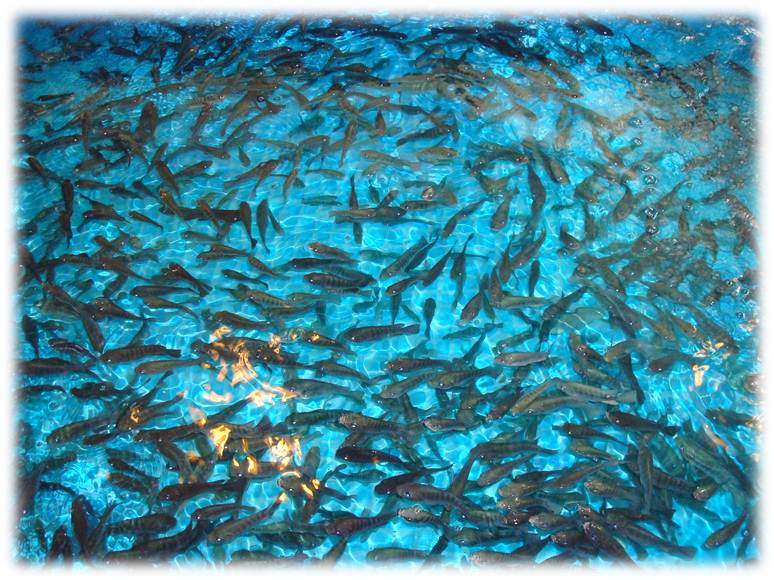

 As fun as it was, I was skeptical at how much it would ‘work’. I was shocked to find out that after one 10 minutes I could already feel the difference on my feet. Through drying my feet off I noticed how smooth my skin was – with a refreshed glow. Walking around post procedure my feet felt lighter and more alive – the tiredness of the day was got (I had been sightseeing all day so I was legitimately tired).


